
Foreign Affairs Chatter, Oct. 6, 2026
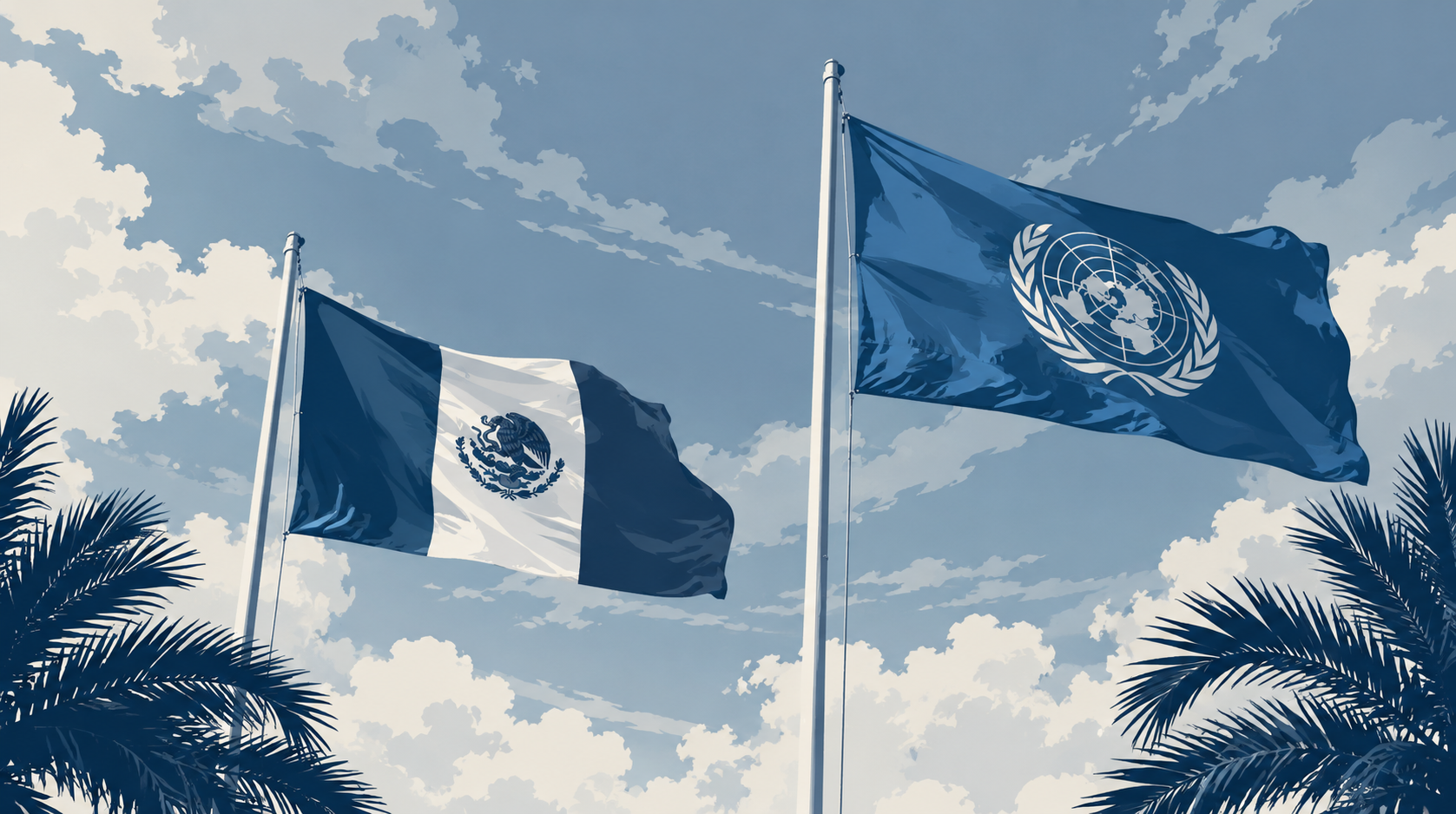
Introducing Mexico Foreign Affairs Chatter
by José-Juan López-Portillo
We are introducing a new member of the Miranda Intelligence Substack family: Mexico Foreign Affairs Chatter, joining Fintech Chatter, Market Chatter, Public Affairs Chatter, Energy Chatter, Politics Chatter, Foreign Press Chatter and Culture Chatter.
Once a month, Mexico Foreign Affairs Chatter will take a development in Mexican foreign policy, a vote, a speech, a negotiation or sometimes a historical analogy, and place it against the longer patterns that help explain Mexico’s behaviour. The aim is not simply to describe Mexican foreign policy, but to help anticipate it.
My three years at the Mexican Embassy in Washington reinforced an old truth: few countries matter as much to the United States as Mexico, and few are as consistently misunderstood there. The reverse is also true. Mexican public debate often has a limited sense of how the country is perceived abroad.
Mexico’s position in the world is unusually difficult to define. It belongs to the OECD and G20 and is deeply integrated into North American supply chains. Yet it also shares many political instincts, historical suspicions and development challenges with the Global South.
Mexican philosophy has a useful word for this condition: nepantla, the Nahuatl idea of being in between. Mexico is North American, Mesoamerican and Latin American at the same time; economically tied to the United States but historically wary of dependence on great powers.
That ambiguity is often treated as a weakness. One argument running through this series will be that it can also be a strategy.
A few recurring questions will sit behind the monthly headlines. How much does Mexico’s historical self-image shape its foreign relations? Is it meaningfully part of the West? Can it behave like a middle power while living beside the world’s dominant power? Can it preserve strategic autonomy while remaining economically integrated with the United States? And can its position between North and South give it diplomatic leverage rather than simply constrain it?
The approach will be analytical rather than partisan. Mexico’s official positions deserve to be taken seriously, though not always at face value. Where policy is coherent, we will say so. Where rhetoric and interests diverge, we will examine why.
Our first edition starts with Foreign Secretary Roberto Velasco’s recent assertion that Mexico does not consider itself a middle power and does not see the world “in terms of powers.”
That apparently simple statement says a great deal about how Mexico sees itself, and how it intends to navigate a more fragmented world.
Mexico in the World
“We Don’t See the World in Terms of Powers”: Mexico’s Doctrine of the Unaligned Neighbour
Roberto Velasco, who took over as Mexico’s Foreign Secretary in April, made two statements in New York last month that are worth reading together.
At the Council on Foreign Relations, he was asked about Mark Carney’s call at Davos in January for middle powers to act together, “because if we’re not at the table, we’re on the menu.” Velasco declined, politely but firmly: “We do not consider ourselves a middle power. We do not see the world in terms of powers” (my translation). Working closely with the United States, he added, does not prevent Mexico from working with the rest of the world.
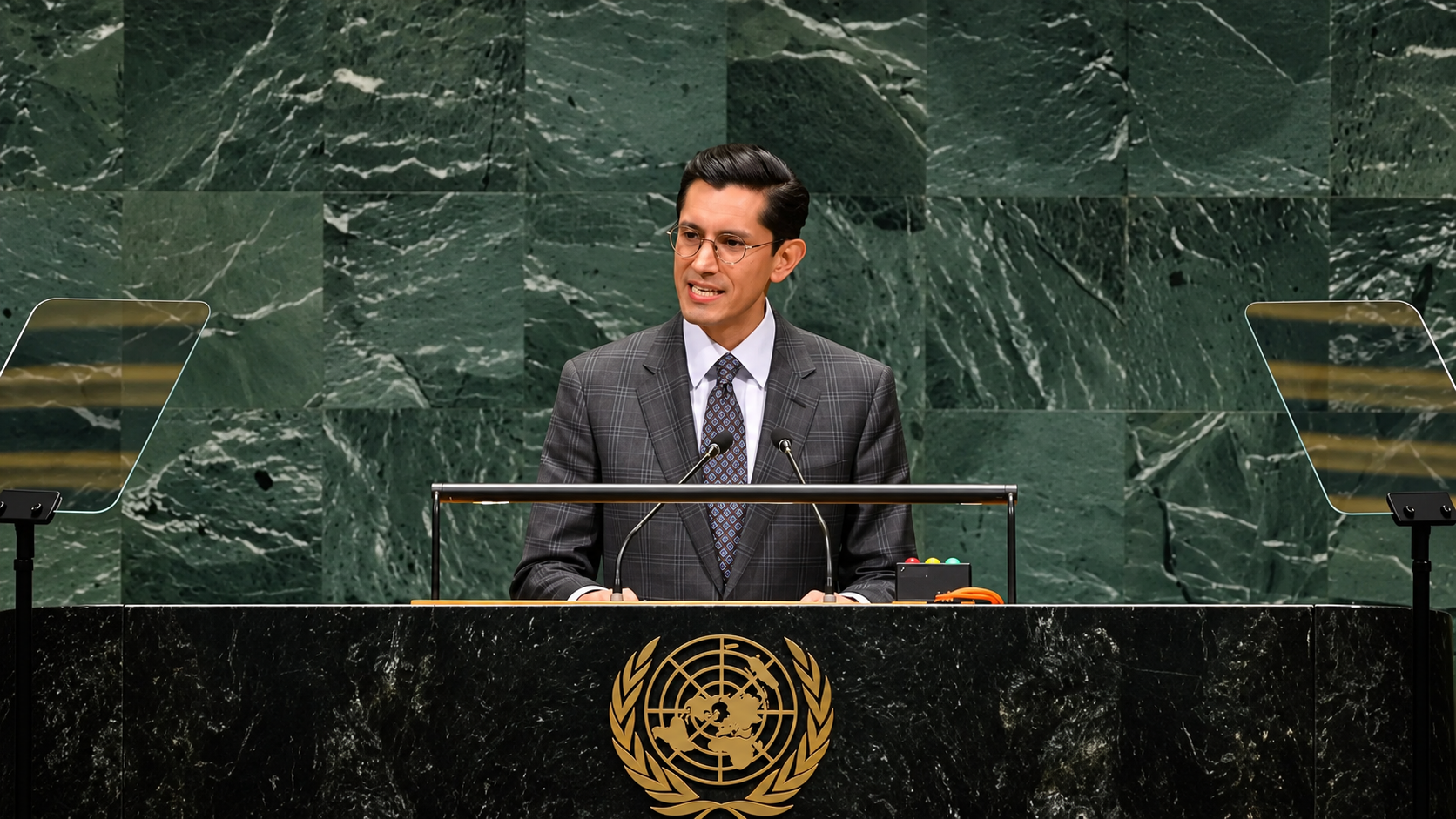
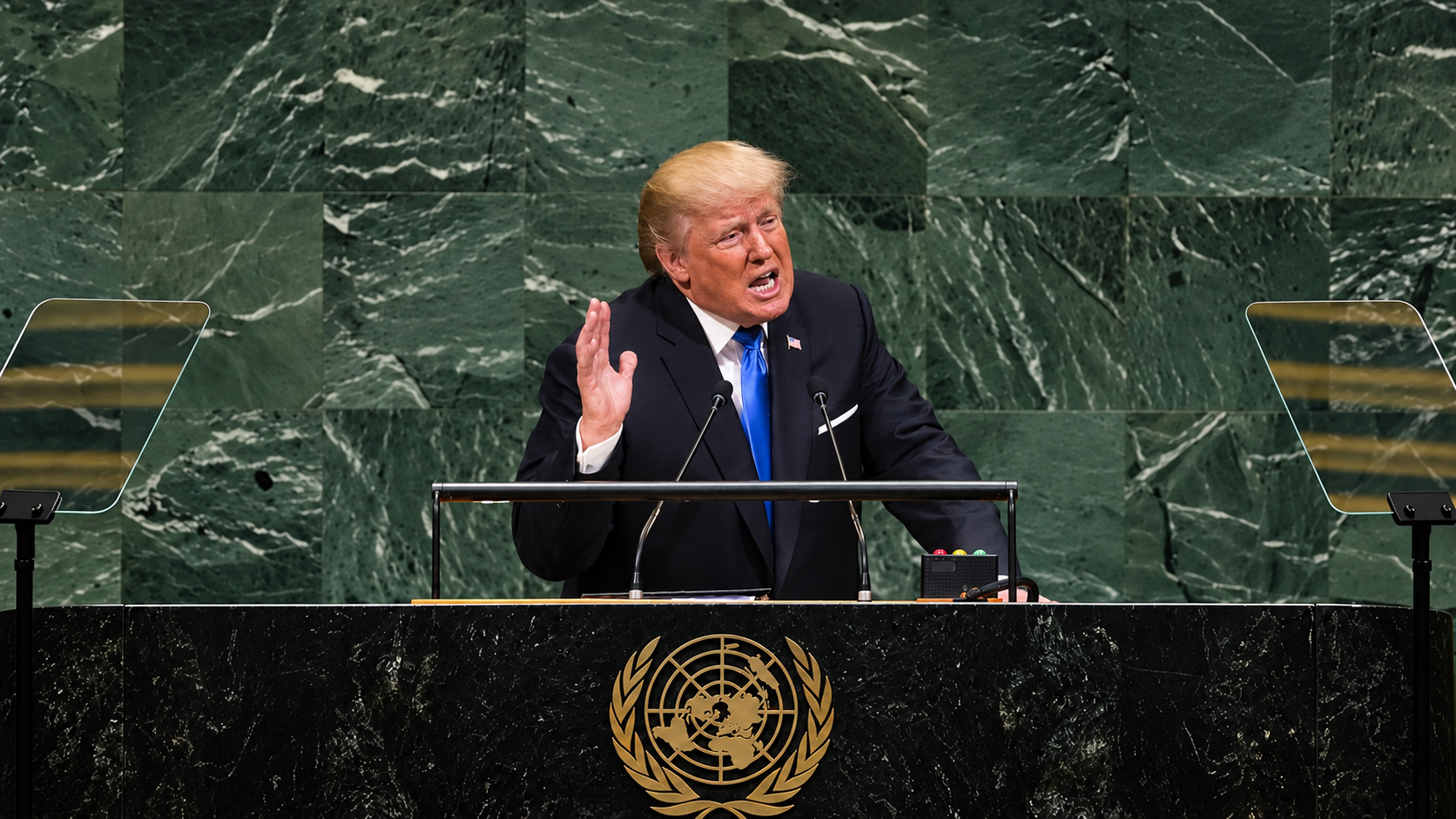
In the same week, at the UN General Assembly, he made the case for the legal equality of states: sovereignty, he said, is not measured by military strength. He invoked Juárez, Carranza and Genaro Estrada, reaffirmed solidarity with Cuba and support for a Palestinian state, and argued that peace “is not decreed or imposed.” Days earlier, from the same podium, President Trump had called Mexico “the epicenter of cartel violence.” Velasco did not mention him. He cited falling homicide figures, achieved “without the logic of war,” and said Mexico can cooperate “closely and respectfully” with its partners while asserting its sovereignty.
It is tempting to dismiss this as old rhetoric where a strategy should be. I think that is a mistake. Read together, the two statements set out a coherent doctrine. Whether it is the right one is a separate question.
Why refuse the label?
On paper, Mexico is a textbook middle power: G20, OECD, a top-15 economy. Declining the title is a choice. I see three reasons for it.
The first is doctrinal. The Estrada tradition holds that states are legally equal whatever their size. To accept a ranking of great, middle and small powers is to concede that hierarchy is legitimate, and that is the premise Mexico has always used to resist a larger neighbour. A weak state gains nothing by adopting the vocabulary of the strong.
The second is strategic. Carney’s proposal is, in practice, a coalition to limit Washington’s room for manoeuvre and to hedge. Canada can afford that: it has NATO, the G7 and its European ties behind it. Mexico does not. Joining a bloc the White House reads as hostile would risk the one relationship Mexico cannot replace, with the USMCA’s future still in question. Velasco ran the ministry’s North America portfolio for five years. He knows where the leverage lies. Furthermore, the Mexican State’s capacity and power has been weakened by decades of underfunding and mistrust. It would find it difficult for any government to orchestrate a dramatic change of strategy given the current conditions.
The third concerns identity. “Middle power” is a term of the North, associated with countries like Canada and Australia. By declining it, Mexico keeps its credentials with the Global South and sends a signal to an important part of its internal political coalition (in both cases the audience for its statements on Cuba and Palestine). This lends the government the legitimacy to pursue its main objective unapologetically: to safeguard Mexico’s commercial integration and cooperation with the USA on migration or security. It speaks the South’s language in New York and manages the North bilaterally: the in-between (nepantla) position, stated as policy.
Symbolically speaking, this also reflects Mexico’s inward-looking sense of what we can call ‘Mesoamericanism’: A sense that things were best before the world intruded on the virtual-isolation of Mesoamerica with the arrival of the Spaniards. There is no putting the genie back in the bottle, but it is possible to defend an established order that minimizes any direct external interference in Mexico or Mexico’s need to interfere with the rest of the world beyond commercial relations that are guided not by political intentionality, but the invisible hand of the market. It echoes AMLO’s famous quip that the best foreign policy was a good internal policy.
What the silence says
Not naming Trump was the most important choice in the speech. In the style In line with President Sheinbaum’s example, Mexico answered an accusation with principles and statistics, not rebuttal. The aim was to make the sovereignty argument on the record without handing Washington a confrontation. Mexico’s long-standing red line, no foreign armed forces operating on its soil, sits behind that language, even though Velasco did not spell it out.
For foreign ministries, the practical message is straightforward. Mexico will not join coalitions designed to balance the United States: not Carney’s, not the BRICS. Nor will it join US-led coalitions that could legitimise intervention, which is why it remains outside the Shield of the Americas. It will cooperate on security case by case, bilaterally and on its own terms.
The cost of the doctrine
The weakness of this approach is that legal equality has always depended on structures that give it force. Estrada’s doctrine worked inside a multilateral system that the great powers were, rhetorically at least, willing to uphold. That system is now disputed, and Washington has shown that even a treaty it asked for (the USMCA) does not constrain it. Principles without coalitions are an argument that might convince others to adopt it. They are not, in themselves, a source of leverage.
Mexico’s own history points to the alternative. Its best-known diplomatic achievement, the Treaty of Tlatelolco (officially: The Treaty for the Prohibition of Nuclear Weapons in Latin America and the Caribbean), did not come from standing apart. It came from building a coalition around a principle, in a region, and then carrying it into the global system. For Velasco, Mexico does not need to be a middle power. But declining the label does not answer the harder question: how does Mexico raise the cost of breaking the rules it defends? Not seeing the world in terms of power does not stop others from seeing it that way: ‘even if you are not interested in power, power is interested in you’, as it were and Mexico may find itself isolated when it matters.
The doctrine is coherent, and it may be the best available option for a state with little room to hedge. Its test will come at the negotiating table over the USMCA, not at the UN podium.
Next: why Mexico’s absence from Washington’s new coalitions is not a hedge, and what it tells us about how the West’s categories fail Mexico.
José-Juan López-Portillo is a Senior Advisor at Miranda Partners, specializing in Mexico’s foreign policy, and international relations from his current base in the UK. He previously served as Counselor and Head of Political Affairs at the Embassy of Mexico in Washington, D.C., leading political engagement and analysis on U.S., Mexico relations, and earlier served at Mexico’s Embassy in Norway. He has also been a professor at CIDE and holds a BA in Ancient and Modern History from Oxford and a PhD from Queen Mary University of London.