MI’s Mexico Public Affairs Chatter, 12 de agosto de 2025

Trump Ups the Ante in Latin America, Muscle or Theater?
Donald Trump has dusted off his maximum-pressure playbook. According to sources, reported by El New York Times y El Wall Street Journal, he’s signed a classified directive authorizing the Pentagon to use military force against drug cartels designated as terrorist organizations, including the Sinaloa, CJNG, and La Familia Michoacana cartels. The order is said to lay the legal groundwork for direct operations overseas, at sea, and potentially on foreign soil. The White House wouldn’t confirm, but Secretary of State Marco Rubio noted that the cartels, as “armed terrorist organizations”, are deserving of a military response.
The Trump administration has also doubled the price on Nicolás Maduro’s head, now offering US$50 million for information leading to the arrest of Venezuela’s president, long seen in Washington as both dictator and narco-broker. The reward has more than tripled since Trump’s first term, less a legal instrument than a political marker: a price tag meant to signal resolve, advertise reach, and dare rivals to test the boundary. If Barack Obama declared the Monro Doctrine “dead” in 2013, Trump’s moves is telling LatAm’s leaders in no uncertain terms that he’s bringing it back.
Still, there’s an open question about how much of this is muscle and how much is theatre. Trump’s “maximum pressure” tactics in his first term often relied on high-profile threats and aggressive rhetoric that stopped short of the most extreme actions. We have seen the same play book in his second term on tariff threats. The classified directive and the bounty hikes may be aimed more at energizing domestic audiences and intimidating adversaries than actually launching real, sustained military operations. For allies and rivals alike, the uncertainty is part of the point, and for Trump it portrays him as a tough guy, and deflects attention from negative news (e.g., recent poor jobs numbers).
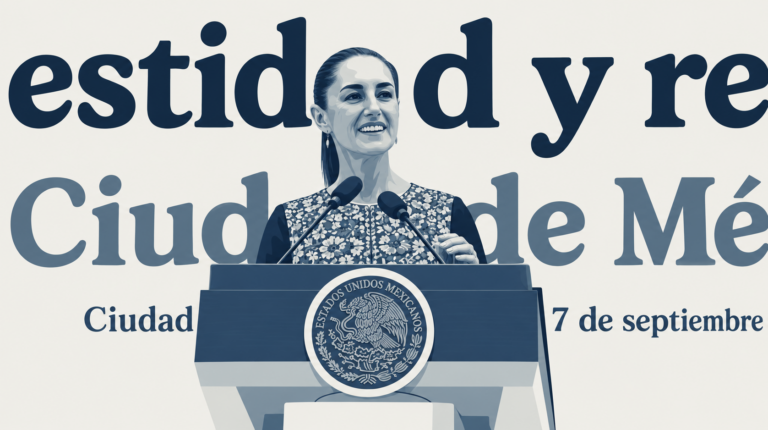
For Mexico, the optics are still worrying. President Claudia Sheinbaum moved quickly to shut down talk of U.S. boots on Mexican soil, calling such a scenario “absolutely discarded” and insisting that cooperation will stay within the bounds of sovereignty. “We cooperate, we collaborate, but there will be no invasion,” she said. The leak, however, landed squarely amid Trump’s intensifying demands on fentanyl enforcement, now intertwined with tariff threats.
For Sheinbaum, it’s a tightrope: concede too much U.S. involvement and trigger a sovereignty backlash, including a revolt from her own less-than-united party; refuse and risk fresh economic pain. If security cooperation fails Washington’s test, the consequences could come in the form of another wave of tariff-driven shocks.
Pemex 2027: From Bailouts to Self-Reliance?
President Sheinbaum has drawn a line in the sand: by 2027, she says, Pemex will meet its debt obligations without additional money from the Finance Ministry. The two-year runway, she says, will carry the company over its heaviest maturities, some US$16 bn in 2025 alone, before it hits “financial self-sufficiency.” Until then, the state is keeping the oil giant afloat with two lifelines of historic scale: US$12 bn in off balance sheet pre-capitalized notes (P-Caps) and US$13.3 bn in a Banobras-backed investment vehicle to fund strategic projects and clear arrears with suppliers, or US$25.3bn in total.
A recap on the P-Caps. A Luxembourg shell company sold the US$12 bn in notes, bought U.S. Treasuries, and lent the Treasuries to Mexico, which passed them to Pemex. Pemex repoed the Treasuries for dollars to shore up its finances and pay off upcoming redemptions. It’s “off-balance sheet” because the legal issuer is the Luxembourg vehicle, and Mexico’s repayment obligation kicks in only if certain triggers occur, (nonpayment by Pemex), avoiding an immediate bump in official debt figures. In reality, it’s of course debt by another name. The triggers that convert the PCAPs into Mexico debt obligations are basically the same as with any other debt (nonpayment). Markets will treat this as Mexican risk from day one, the structure delays recognition, but not responsibility. Older readers will remember that Mexico relied on clever off-balance sheet financing (from Nafinsa) to prop up the Peso and government finances back in 1994, without success in that case.
With respect to the other US$13 bn, Banobras will front at least half from its own balance sheet, with the rest supposedly coming from commercial banks and, later, capital markets, sweetened by government guarantees. The bet is that 21 high-return mixed-development projects, already in adjudication, will lift output and generate the cash to pay investors back.
Despite this encouraging news, there has still been a lack of detail on how and when existing suppliers are going to be paid. Pemex owes suppliers about MXN 65 billion for un-invoiced work from 2024 and early 2025, part of a wider US$23 billion supplier debt. AMESPAC which represents Pemex suppliers, says the new Pemex plan offers no concrete measures to settle these debts, warning unpaid bills could hit production. AMESPAC is seeking a formal working group to clarify rules, timelines, and eligibility for the fund. Major members include Baker Hughes, Halliburton, Weatherford, SLB, and Grupo México, all affected by delayed payments, some like Grupo Mexico recently halting operations with Pemex.
Energy Secretary Luz Elena González calls it a fix for Pemex’s “structural financial challenges,” one meant to boost efficiency, secure domestic fuel supply, and advance the energy transition. Fitch’s two-notch upgrade of Pemex to ‘BB’, its first in over a decade, signals confidence in tighter government oversight and a framework that now ties the oil giant’s debt ceiling and liability management directly to the Finance Ministry.
Moody’s, for its part, flags a different hazard: the new Banobras-backed fund boosts development banks’ exposure to oil-sector risk, including Nafin and Bancomext, pushing them toward regulatory lending caps. Federal guarantees may soften the blow, but in a market where commercial lenders keep Pemex at arm’s length, the government’s deeper embrace also concentrates risk in its own financial arms, making the “upgrade” as much a political bet as a balance-sheet call.
Still, doubts remain. Think-tank IMCO welcomed the new investment fund but warned the state oil company still needs to generate more resources this year to sustain capital spending. Pemex’s 2025 investment budget stands at MXN 211.2 bn, 68% of which was already committed by midyear, and historical data show the firm has spent more, over MXN 461 bn in real terms, in seven of the past 15 years.
Killing the Trend: Mexico’s Homicide Decline Reverses
After three consecutive years of decline, Mexico’s homicide numbers ticked upward in 2024, denting the narrative of steady improvement in public security. Preliminary INEGI data put the year’s death toll at 33,241, 989 or 3.1% more than in 2023, according to INEGI raising the national rate from 24.9 to 25.6 per 100,000 inhabitants. (INEGI implicitly is saying with these figures that mid-year population grew from 129.53mn in 2023 to 129.85mn in 2024, which seems on low side, other INEGI and World Bank data suggest Mexico’s current annual population growth is nearer 0.8%, not the 0.25% INEGI is using in this data). Seven out of ten victims were killed with firearms, and men bore the brunt, with a rate of 46 per 100,000 versus 5.6 for women.
The 3.1% homicide rise is modest but for sure higher than population growth and thus politically inconvenient, being concentrated in states like Tabasco, Sinaloa, and Chiapas, alongside perennial hotspots Guanajuato, Baja California, and Chihuahua. Analysts cite organized crime dynamics, the violent 2024 electoral cycle, 889 victims including 39 candidates, and the steady flow of illegal weapons, an estimated 80% from the United States.
Sheinbaum has so far sidestepped the numbers, sticking to her October-launched security strategy of tackling root causes and strengthening intelligence. But with homicide now the leading cause of death for Mexicans aged 15 to 44, and 88 people killed on average each day in early 2025, the margin for claiming “stabilization” is razor-thin. Whether this proves a temporary blip or the start of a new plateau will hinge on 2025’s figures, and on whether the much-touted U.S.-Mexico security agreement dares to take on the gun trade.
Contacto:
Gilberto García
Socio y Jefe de Inteligencia
gilberto.garcia@miranda-partners.com
Laura Camacho
Directora Ejecutiva de Asuntos Públicos de Miranda
laura.camacho@miranda-partners.com
Descargar PDF: MI-PublicAffairsChatter-081225