Mexico Podcast Chatter, November 18, 2026
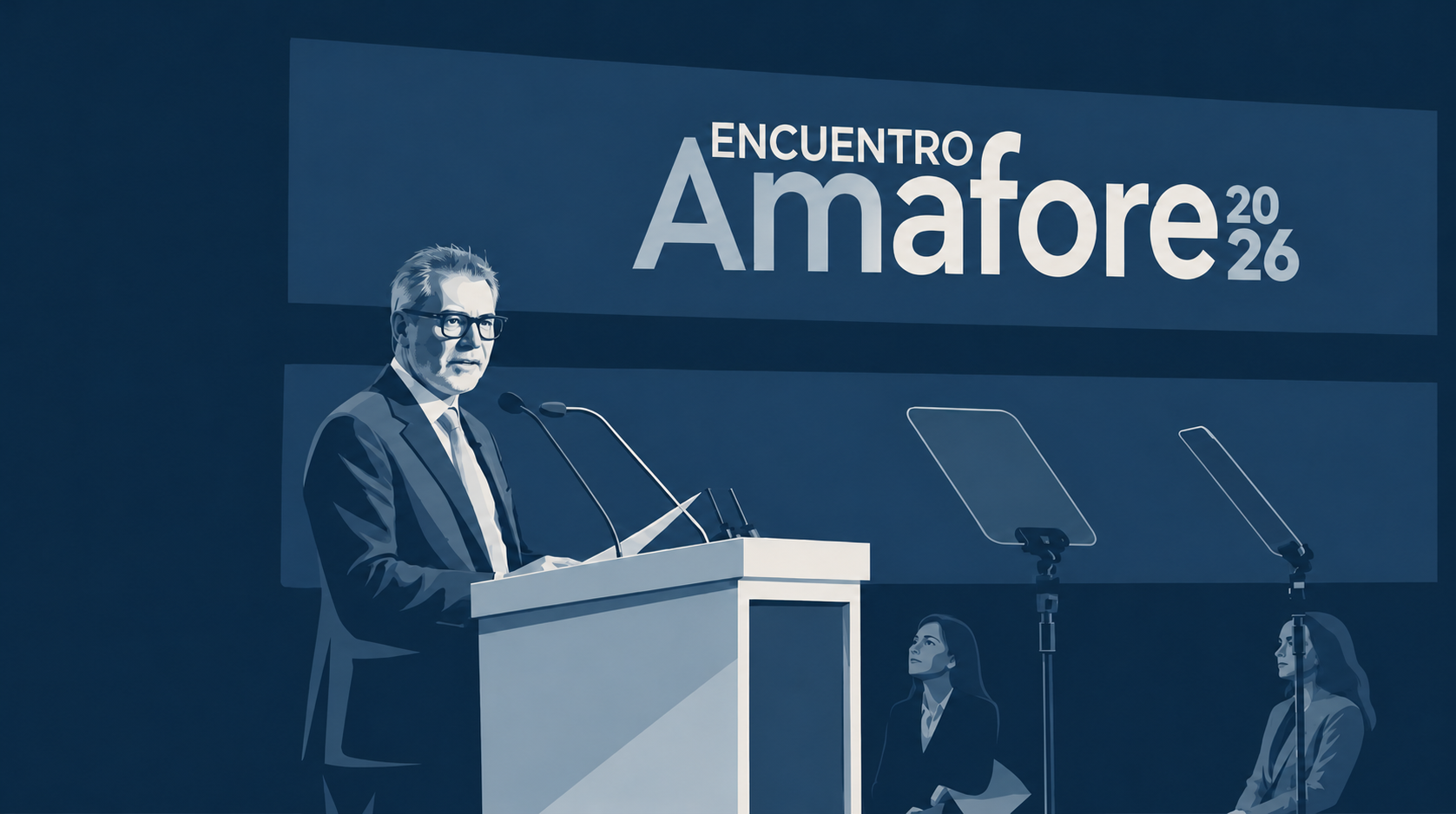
Our pick of the week is MexMoves, which broadcasts from the AMAFORE annual convention with two of the world’s largest asset managers. Sergio Méndez, head of BlackRock Mexico, explains that the Afores, Mexico’s pension fund managers, already hold assets equivalent to between 23 and 25 per cent of GDP, and that his firm wants to set up vehicles bringing together pension funds and foreign investors to finance Plan México, though he warns there aren’t enough projects yet. Rob Lovelace of Capital Group has been investing in Mexico since 1985. On the episode he argues that the Afores should diversify abroad, and he laments how few mid-sized companies are listed on the Mexican stock exchange.
In business and economics, Whitepaper 10, Dimes y Billetes, Broojula, Peras y Manzanas and La Estrategia del Día focused mainly on consolidation in the pharmacy sector and Jensen Huang’s departure from Nvidia. Whitepaper 10 looks at Farmacias del Ahorro’s acquisition of Farmacias Benavides, which creates a chain of more than 3,100 branches whose sales still trail well behind those of Farmacias Guadalajara. Dimes y Billetes examines how Huang’s resignation has exposed chip smuggling into China, and on Broojula an analyst from GBM reads the fall in the share price as a market overreaction. Graciela Rojas, founder of Movimiento STEM, warns on Peras y Manzanas that Mexico produces more engineering graduates than Germany, yet that talent won’t turn into innovation without STEM skills and proper careers guidance. La Estrategia del Día also follows Donald Trump’s latest threats against Mexico and the APEC summit in China.
In national politics, the crisis at the INE, Mexico’s electoral authority, remained at the centre of the conversation. Tercer Grado criticises the president for using her morning press conference to pin the blame on previous administrations. On Botepronto, the panel debates whether the scandal has already damaged the institute’s legitimacy or whether its structure is robust enough to deliver the 2027 election. Dania Ravel and Leonardo Valdés Zurita warn on Política y Otros Datos that without an impartial technical committee, the strongest female candidates won’t put themselves forward to lead the INE. Sal con Amigos interviews journalist Sonia Serrano about the grip private consultants have on the Jalisco state government’s communications, and El Noti covers Trump’s tariff threat and the death of Miguel Ángel Félix Gallardo.
On security and crime, Narcosistema interviews columnist Lourdes Mendoza, who claims, on the strength of testimony from supplier José Alfredo Hernández Casillas, that the INE crisis began with a romantic relationship between him and Guadalupe Taddei. These allegations rest on that testimony and on sources the episode does not allow listeners to verify independently.
Finally, in history and culture, Productistas talks to Kerstin Erdmann, a partner at the OMR gallery, about an art market that stretches well beyond Art Week and about the support young galleries need in order to grow.
Mexico Business, Economics & Finance
Farmacias del Ahorro’s purchase of Benavides creates a chain of more than 3,100 stores, although its sales would still trail Farmacias Guadalajara, Whitepaper 10
Whitepaper 10 analyzes the sale of Farmacias Benavides to Farmacias del Ahorro by The Boots Group, which belongs to the U.S. fund Sycamore Partners. The deal includes 1,133 pharmacies, about 400 doctor’s offices and sales of nearly 22 billion pesos over the past 12 months. The amount was not disclosed, although industry sources told René Lankenau it would be under 500 million dollars. Lankenau recalls that Benavides, founded in Monterrey more than a century ago, was the country’s leading chain. In 2002, however, Chile’s Farmacias Ahumada bought control for 45 million dollars, and the company later passed to Walgreens, where it stagnated. Between 2018 and 2025 its sales grew just 2% in real terms, compared with 147% in nominal terms for Farmacias Guadalajara, and in ten years it had six CEOs. Farmacias del Ahorro, by contrast, was born in Chiapas about 35 years ago, moved its headquarters to Monterrey and now has about 2,000 stores and estimated sales of 50 billion pesos. The combined company would have more than 3,100 pharmacies, almost as many as Farmacias Guadalajara, but with sales of about 80 billion pesos, compared with about 130 billion for the Guadalajara-based chain. Lankenau explains that the business is difficult because of the cost of keeping full inventories, shrinkage and the low margins on medicines. He anticipates savings from a single headquarters and from adding Del Ahorro’s private-label brands, although he warns of cultural challenges and the pending approval of the competition authority. Karla Berman also discusses the premiere of the new season of Shark Tank México and Farmacias Similares’ bet on producing television content with Dr. Simi.
11/16/26, René Lankenau and Karla Berman, Whitepaper 10
BlackRock and Capital Group see the Afores as the main engine for Mexico’s capital markets, as debate grows over Banxico’s rate cut, MexMoves
MexMoves broadcasts from the annual convention of AMAFORE, the pension fund association, with two interviews with major asset managers. Sergio Méndez, head of BlackRock in Mexico, explains that in six years the office grew from 130 to more than 400 employees and that the Afores, Mexico’s pension fund managers, now manage the equivalent of 23% to 25% of GDP. He highlights that the biggest growth came from the wealth segment, that is, families and family offices, and that he is already negotiating the renewal of the agreement with Banamex, whose funds BlackRock has managed since 2018 and which expires in 2028. He believes BlackRock can support Plan México by creating vehicles that bring together Afores and foreign investors, although he warns that more projects are needed. He adds that there is no single solution to get more companies to go public, but rather a set of regulatory, corporate governance and incentive adjustments. Rob Lovelace of Capital Group, who has invested in Mexico since 1985, argues that the Afores should diversify abroad, since the Mexican stock market has delivered weak returns compared with the U.S. market. He also laments the scarcity of mid-sized listed companies and stresses that the relationship between Mexico and the United States is one of integration, not just trade. On the news front, Damian Fraser criticizes Banxico’s cut to 6.25% with inflation above target, while Eduardo García supports it given the weak economy. They also review CFE Capital’s plans to raise up to 867 million dollars for power transmission and Pemex’s talks with BP on deepwater projects. Finally, they discuss Claudia Sheinbaum’s trip to the APEC summit in China and an IMCO study on the scarce presence of women at the helm of listed companies.
11/12/26, Damian Fraser and Eduardo García with Sergio Méndez and Rob Lovelace, MexMoves
Jensen Huang’s resignation from Nvidia exposes chip smuggling to China and the risk of concentrating so much power in a single company, Dimes y Billetes
Dimes y Billetes looks at Jensen Huang’s resignation as Nvidia’s chief executive and from its board on 12 November, after the company’s founder admitted to extramarital affairs. One of them was with Alice Huang, founder of a Singapore-based data centre company that US officials say was passing information to Beijing. Moris Dieck points out that there is no evidence Huang knowingly helped China, and notes that the Chinese government has denied the accusations. Chief financial officer Colette Kress has taken over on an interim basis.
Dieck explains that Nvidia controls around 90 per cent of the market for artificial intelligence chips, and that China accounted for roughly a quarter of its revenue before Washington restricted those sales. Once the ban came in, purchases from Singapore soared, particularly those made by Megaspeed, Alice Huang’s company. According to US investigators, the firm went from having no assets to buying billions of dollars’ worth of chips within a year, and is alleged to have diverted some 240,000 of them to China. Dieck asks why the case has only now come to light if the Trump administration had known about it for a year, and links its timing to the Republicans’ weakened position after the midterm elections. Nvidia’s share price has fallen by close to 25 per cent in a month. He expects Huang may return to the board, though not as chief executive, and predicts that Washington will tighten controls on chip exports.
The episode also covers inflation in Mexico, which rose to 3.75 per cent in October, its third consecutive monthly increase, and warns that a Federal Reserve rate rise in December could put pressure on the peso.
11/17/26, Moris Dieck, Dimes y Billetes
Jensen Huang’s departure sinks Nvidia’s stock, but a GBM analyst sees a market overreaction and a long-term opportunity, Broojula
Broojula analyzes the financial impact of Jensen Huang’s resignation as CEO, chairman and board member of Nvidia on November 12. Ana Paula Ordorica recalls that Huang had more than 50 direct reports, that his children hold management positions and that his succession had never been discussed. Andrés Solea, vice president of Financial Products at GBM, explains that most analysts cut their price targets from more than 300 to about 200 dollars per share, and that the stock now trades around 160. In his view, the selloff mainly reflects market sentiment and the fear that the company will grow more slowly without Huang, who closed the deals with partners across the sector. He argues, however, that at 11 times estimated 2027 earnings the company looks cheap, since its profits are expected to grow 70% with sales already committed. He does not rule out the stock falling below 130 dollars, but would see that as an opportunity. He also considers it unlikely that Huang will return as CEO, despite the more than 170,000 signatures supporting him, although he could come back as chairman of the board or as an adviser. Ordorica warns that the case exposes the risk of depending on a single person at artificial intelligence companies, as is also the case with Elon Musk at SpaceX and Starlink. Solea denies that this is a bubble like the one in 2000, since valuations are lower and earnings keep growing. On the news front, the episode reviews Claudia Sheinbaum’s arrival at the APEC summit in China, where she will meet with Xi Jinping, and Trump’s new threat to double tariffs on Mexico over the migrant caravans. It also covers recent technology failures at U.S. banks and airlines.
11/17/26, Ana Paula Ordorica with Andrés Solea, Broojula
Weekly summary, La Estrategia del Día
La Estrategia del Día examines a week marked by Jensen Huang’s resignation from Nvidia, Donald Trump’s new offensive against Mexico and the APEC summit in China. The episodes follow the scandal that led Huang to leave the company, with implications for U.S. national security and the future of its leadership. They also cover the collapse of Nvidia’s stock and the possibility that Huang could return. In energy, the podcast reviews Pemex’s interest in partnering with Petrobras, Eni and BP in the Gulf of Mexico and the CFE’s plans to place a Fibra E. In trade, the week includes a conversation with AmCham about the USMCA review, Trump’s new threats against Mexico and the meeting of Claudia Sheinbaum, Trump, Xi Jinping and Vladimir Putin in China. On the corporate front, the podcast covers Farmacias del Ahorro’s purchase of Farmacias Benavides, the merger of Elon Musk’s companies and news from Anthropic and the fintech Clara. Other topics include the AMIB, a surveillance drone and the announcement of the new James Bond.
11/11/26, 11/17/26, Jimena Tolama, La Estrategia del Día
Mexican Political Affairs
The panel accuses the president of using her morning press conference to spread blame for the INE crisis, while Stephen Miller signals a harder line toward Mexico, Tercer Grado
Tercer Grado analyzes the INE crisis, after lawmakers left for a long weekend without issuing the call to choose Guadalupe Taddei’s replacement. Leo Zuckerman asks whether, by blaming previous administrations, Morena is preparing the ground to destroy the INE, as it did with the judiciary. He also recalls that Taddei systematically voted in favor of the ruling party. Leopoldo Gómez sees a smokescreen to reinforce the narrative that all corruption comes from the past, and Denise Maerker criticizes the president for using her morning press conference to draw up a “genealogy of sinners” without evidence, instead of letting the institutions act. Raymundo Riva Palacio speaks of a cover-up, since the Attorney General’s Office did not open an investigation in time and the Financial Intelligence Unit took a week to freeze accounts. Viridiana Ríos, by contrast, recalls that corruption at the institute goes back decades: the supplier oligopoly has operated for about 27 years. She adds that the internal oversight body that failed to act was chosen by all parties, and that Morena acted against Taddei more quickly than in other cases. In the second part, the panel reviews the capture of R2, leader of the Los R group linked to the Jalisco New Generation Cartel, and the death of the alleged mastermind of the murder of Milton Morales, a Mexico City intelligence chief. It also reviews the arrest in Colombia of a judge linked to the network of former Canadian Olympian Ryan Wedding. Gómez and Zuckerman acknowledge the government’s offensive against organized crime, although Maerker warns that extortion has barely declined. The panel agrees that the appointment of Stephen Miller as Trump’s chief of staff signals a harder line toward Mexico.
11/12/26, René Delgado with Denise Maerker, Raymundo Riva Palacio, Leopoldo Gómez, Leo Zuckerman and Viridiana Ríos, Tercer Grado
Without an impartial technical committee or consensus among parties, the best candidates will not seek to lead the INE, warn Dania Ravel and Leonardo Valdés, Política y Otros Datos
Política y Otros Datos analyzes how to rescue the INE after Guadalupe Taddei’s resignation. The institute faces 30 vacant management positions, a budget cut of 6 billion pesos and complaints before the Attorney General’s Office, 205 days before an election with 17 governorships at stake. It does so with Dania Ravel, a former INE councilor, and Leonardo Valdés Zurita, a former president of the IFE. Ravel considers the internal efforts insufficient, although she welcomes the unanimous appointment of the provisional president. She warns, however, that the councilor chosen always voted with Taddei, even on questioned decisions such as the one on unfolded ballots. She recalls that the 2024 reform allowed the president to appoint directors on her own and that neither the Supreme Court nor the Electoral Tribunal corrected it. She also criticizes the fact that the technical evaluation committee is now made up of members appointed by the Chamber of Deputies and the National Human Rights Commission, whose impartiality she questions. Valdés argues that the INE’s cost reflects the responsibilities the parties themselves assigned to it, such as the voter ID card, radio and television monitoring and campaign finance oversight. He warns that several former colleagues have told him they will not apply if the committee is once again biased toward the ruling party, so he sees a bleak outlook. He also fears that the electoral reform Claudia Sheinbaum announced for after 2027 will revive López Obrador’s proposal to elect councilors by popular vote, which in his view would lead to an autocracy. Both call on the president to convene a consensus among all political forces to choose the new head, who by order of the Electoral Tribunal must be a woman.
11/12/26, Mariel Ibarra with Dania Ravel and Leonardo Valdés Zurita, Política y Otros Datos
Sonia Serrano warns that in Jalisco private consultants control the government’s communications, while the water crisis and disappearances expose its lack of answers, Sal con Amigos
Sal con Amigos talks with Sonia Serrano, head of investigations at NTR and one of Jalisco’s most recognized journalists. Serrano describes the state as one of the epicenters of violence in the country, the national leader in disappearances and facing a forensic crisis that has accumulated nearly 6,000 unidentified bodies and remains. She also notes that the criminal leaders recently arrested, such as R2, led everyday lives in Guadalajara and Zapopan, and warns that society tolerates their presence. On journalism, she explains that the crisis in the business model has been compounded by a scheme that, in her view, took root under Aristóteles Sandoval and was consolidated under Enrique Alfaro. Under it, government communications were handed over to private companies that design the strategy, produce the content and buy advertising with public funds, even against critics. She adds that Pablo Lemus has kept the scheme with some adjustments, and that officials avoid interviews and respond with fact sheets or videos. She considers the water crisis the worst in Guadalajara’s history in terms of the number of people affected: supply cuts affect 627 neighborhoods, and the Las Pintas canal, which supplies the city, has become a destination for sewage discharges. She also doubts the situation will normalize in March, as the government promises. She criticizes Lemus for taking six weeks to speak with the press and expects the crisis to shape the 2027 campaigns. Finally, she reveals that in 2024 she spoiled five of her six ballots because no candidate convinced her.
11/11/26, Salvador Camarena with Sonia Serrano, Sal con Amigos
The panel debates whether the Taddei scandal has already damaged the INE’s legitimacy or whether its structure is strong enough to carry out the 2027 election, Botepronto
Botepronto analyzes Claudia Sheinbaum’s offensive against the INE’s past administrations. Carlos Heredia sees it as a distraction to avoid talking about what is happening with Morena today, and cites José Woldenberg’s columns urging the president to protect the dignity of her office instead of looking for culprits in the past. He warns that Taddei’s INE, the one that granted a qualified majority not won at the ballot box, is today a “zombie INE” lacking the legitimacy an electoral referee requires. He also expects impunity to prevail once again. Salvador Camarena argues that the amount embezzled may not be that large compared with other corruption cases under the López Obrador-era governments, but that this one is particularly vulgar. He believes Sheinbaum has decided to act as the leader of a movement rather than a head of state, and does not rule out that she will use the word “cleanse” to justify overhauling the INE as was done with the judiciary. He disagrees, however, that the institute’s legitimacy is lost. He explains that two councilors told him privately that electoral operations remain on track and that the biggest immediate risk is the internal labor dispute. He also notes that Taddei’s attempt to validate unfolded ballots split even the bloc that supported her. He warns, by contrast, that the election would be compromised if the Interior Ministry intervenes in the appointment of the new president. Carlos Puig agrees that the institute is much bigger than its general council and that no one votes thinking about who leads it.
11/10/26, Carlos Puig, Salvador Camarena, María Scherer and Carlos Heredia, Botepronto
Weekly summary, El Noti
El Noti reviews a week marked by new revelations in the INE scandal, Donald Trump’s tariff threat and the death of Miguel Ángel Félix Gallardo. The episodes follow Morena’s campaign against former presidents of the IFE and the INE, revelations that Guadalupe Taddei’s favorite businessman even meddled in the institute’s communications, and the increase in funding for political parties, of which Morena is the biggest beneficiary. In politics, the podcast covers accusations that Maru Campos knew about the presence of CIA agents in Chihuahua and Claudia Sheinbaum’s backing of Andy López Beltrán. On security, the week includes the rise in homicides and high-impact crimes over the past two months and the death of Félix Gallardo, considered the founder of Mexican drug trafficking. On the economy, the podcast warns that the gasoline subsidy is opening a hole in public finances. Internationally, it follows Trump’s threat to raise tariffs on Mexico over the migrant caravan, the resignation of Nvidia’s CEO over the case of an alleged Chinese spy and Sheinbaum’s trip to the APEC summit in China. Other topics include the strike in Spain.
11/11/26, 11/17/26, El Noti
Security and Crime
Anabel Hernández argues, based on the testimony of columnist Lourdes Mendoza, that the INE crisis grew out of a romance between Guadalupe Taddei and her supplier José Alfredo Hernández Casillas, Narcosistema
Narcosistema devotes its episode to the INE scandal and interviews El Financiero columnist Lourdes Mendoza, who says she met José Alfredo Hernández Casillas, the supplier who appears in the videos with Guadalupe Taddei, in April. According to Mendoza, Hernández Casillas showed her photographs and videos of his relationship with Taddei. They included the marriage proposal and discussion of a mansion in the Pedregal worth about 120 million pesos that they planned to buy. She says Taddei hired him in November 2023, through an intermediary, as an adviser to restructure the institute and even select its executives, and that the romantic relationship began in mid-2024. She adds that the breakup came over a dispute about which supplier would win a contract and that he claimed Taddei and her family owed him about 300 million pesos. She maintains, however, that he did not want the videos made public and that someone leaked them. Hernández argues that Morena controlled the 2023 selection process and recalls that López Obrador called Taddei “our proposal.” She also notes that two of Taddei’s cousins held posts in the federal government. She points to Alfonso Durazo, governor of Sonora, as Taddei’s main sponsor, since one of Taddei’s sons is his private secretary. Mendoza also links people close to Durazo to key positions at the INE, and both criticize Claudia Sheinbaum’s attempts to distance Morena from the case. These are allegations by the journalists based on Hernández Casillas’s testimony and on sources that the episode does not allow to be verified; it does not include a response from those named.
11/11/26, Anabel Hernández with Lourdes Mendoza, Narcosistema
Mexican Culture and History
Mexico graduates more engineers than Germany, but without STEM skills and career guidance that talent does not translate into innovation, warns Graciela Rojas, Peras y Manzanas
Peras y Manzanas talks with Graciela Rojas, founder and president of Movimiento STEM, a nonprofit organization that seeks to influence education policy to promote science, technology, engineering and mathematics. Rojas explains that these disciplines do not only train engineers, but also develop skills useful in any profession, such as critical thinking and problem solving. She also highlights the gender gap, which forms in childhood: 35% of parents expect their son to become an engineer, compared with 14% for their daughters. As a result, women account for about 30% of engineering talent and just 3% to 4% in technology. Valeria Moy warns that many young people choose their degree only to avoid mathematics. She adds that, although Mexico graduates more engineers than Germany, that talent does not translate into innovation, since patent registrations remain very low, with Jalisco as the exception. Rojas says Movimiento STEM has trained more than 250,000 teachers, about 10% of the total, in project-based learning, with official recognition and at no cost to the government. She proposes making career guidance mandatory and including a STEM subject from preschool through high school. She also suggests creating an autonomous educational innovation body, like Uruguay’s Plan Ceibal, which has spent 25 years connecting all of the country’s schools. Both agree that artificial intelligence could widen the gap between those who developed critical thinking and those who did not. Finally, Rojas urges parents and teachers to avoid gender stereotypes and recommends the film Hidden Figures.
11/11/26, Valeria Moy with Graciela Rojas, Peras y Manzanas
Kerstin Erdmann argues that Mexico’s art market goes far beyond Art Week, but that young galleries need support to grow, Productistas
Productistas talks with Kerstin Erdmann, partner at the OMR gallery and director of the master’s program in contemporary art, markets and business that Centro offers with the Sotheby’s Institute of Art. Avelino Rodríguez recalls that the visual arts account for 6% of cultural GDP, about 48.5 billion pesos. He adds that Art Week 2026 generated an estimated economic impact of 3 billion pesos, with 378,000 visitors. Erdmann highlights that the art business benefits many invisible trades, from artists’ studios to shippers and specialized storage facilities. She says OMR’s latest exhibition received 12,000 visitors during Art Week and that about 50 groups of patrons from foreign museums visit the city during those dates. She also explains that galleries that take part in international fairs sell between 60% and 70% of their work to foreign buyers. That is why the industry is seeking to activate the rest of the year with initiatives such as GAMA, which brings together 30 galleries in September. She sees Mexico as an oasis amid uncertainty in Europe, although she acknowledges that a group from the Museum Ludwig canceled its trip to Guadalajara because of the violence. She also recounts how OMR has restored and run the Lago/Algo space in Chapultepec since 2022, without outside support, as a free cultural center. She adds that Fiartes now supports about 120 projects, although young artists struggle to find companies to back them. Finally, she argues that emerging galleries need mentoring, financial advice and support to take part in international fairs.
11/12/26, Avelino Rodríguez and Ilana Sod with Kerstin Erdmann, Productistas