Mexico Culture Chatter, November 21, 2026
A Frida Too Far
Frida Kahlo is continuing her busy afterlife in global cultural news this week.
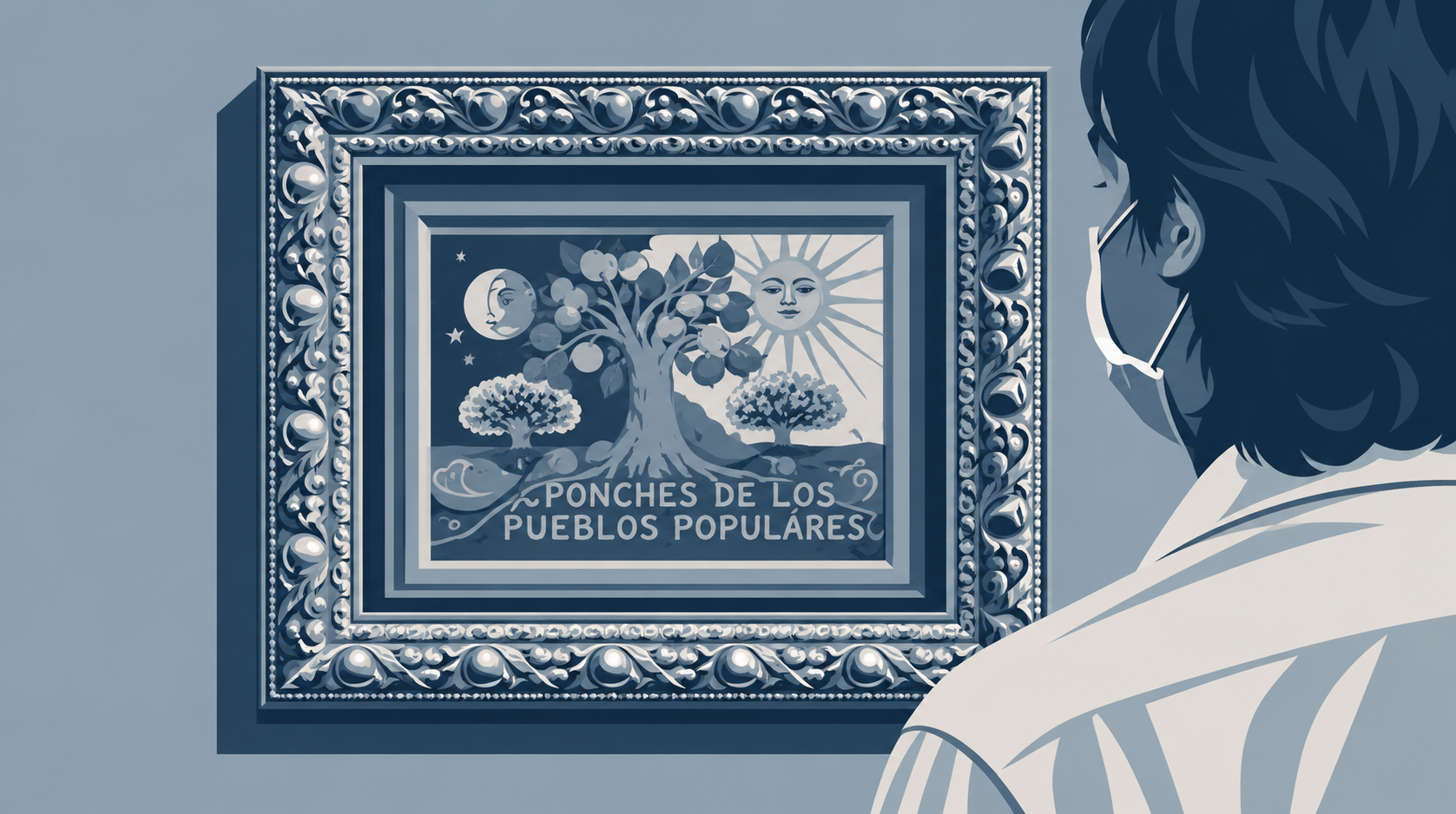
Christie’s withdrew a Kahlo painting from its 20th-Century Evening Sale in New York on 17 November, hours before bidding was due to open, after Mexican authorities and activists questioned how the work had left the country. Congreso de los pueblos por la paz (1952), estimated at US$2.5 million to US$3.5 million, is alleged to be one of several works that went missing from the Casa Azul, the Mexico City house-museum where Kahlo lived. A Christie’s spokesperson said the lot had been withdrawn “in collaboration with the seller” for further research, and that it hoped to sell it later.

Congreso de los pueblos por la Paz by Frida Kahlo. (Banco de México Diego Rivera Frida Kahlo Museums Trust, Mexico, CDMX/Artists Rights Society (ARS), New York; Photo by Cindy Ord/Getty Images)
Kahlo painted the work in October 1952 for the Congress of the Peoples for Peace, a pacifist gathering in Vienna that December. It shows a white dove perched in a fruit tree flanked by mushroom clouds. In her diary that autumn, Kahlo wrote that for the first time her painting was following the party line, calling it Revolutionary Realism. She was too ill to travel, so she sent it with Diego Rivera and his daughter, the architect Ruth Rivera Marín, according to the critic Raquel Tibol.
The dispute turns on when the painting finally left Mexico. The National Institute of Fine Arts and Literature (INBAL) initially said it had gone abroad in 1952, more than three decades before the 1984 decree declaring Kahlo’s work an Artistic Monument. INBAL has held that the decree’s ban on permanent export applies only to works that were in Mexico when it was published. Christie’s own records, however, place the painting in Kahlo’s only lifetime solo exhibition, at Lola Álvarez Bravo’s Galería de Arte Contemporáneo in April 1953. No further exhibition is recorded until 1997.
The campaign group Defendamos la Colección Gelman says the painting appears in the inventory of the Casa Azul’s contents, which Rivera left in trust to the Mexican people in 1955 on condition that the collection remain intact on the property. Rivera’s grandson, the painter Pedro Diego Alvarado, told El País that he places the work in Kahlo’s studio. Hilda Trujillo, director of the Casa Azul from 2009 to 2020, wrote in an April 2025 blog post that several Kahlo works, this one included, had disappeared before her tenure. She said the losses were discovered during an inventory in the early 2010s and reported to the Bank of Mexico, which administers the trust, but that no action followed. The bank has said Trujillo was dismissed for unspecified irregularities and never filed a formal complaint, which she denies.
Labels on the back of the canvas show that the New York gallerist Ramis Barquet owned the painting in the late 1990s. An unidentified owner sold it at Sotheby’s in June 2020 for US$2.66 million.
On the day of the sale, INBAL asked Christie’s for full provenance documentation and a postponement, citing Article 26 of the Federal Law on Archaeological, Artistic and Historic Monuments and Zones. The Casa Azul told Christie’s that the work was part of an open investigation by the relevant Mexican authorities; its director, Perla Labarthe, declined to elaborate.
The episode’s most vocal critics are familiar. Defendamos la Colección Gelman formed to challenge INBAL’s approval of the export of the Gelman Collection, a privately owned trove that includes Kahlo masterworks and is managed by Banco Santander for the Zambrano family (which we have covered in previous editions). The collection opened the bank’s Faro Santander cultural centre in Spain in September and is not due back in Mexico until 2028. The collective has filed amparos arguing that INBAL approved the departure as a single block rather than assessing each protected work, and has demanded greater transparency over the terms.
A pending Supreme Court case could redraw the rules. In July, the court agreed to hear an amparo brought by Banco Ve por Más, part of the Del Valle family’s Grupo Kaluz, after INBAL refused to let it permanently export Kahlo’s Autorretrato con medallón (1948). The bank argues that the 1984 decree’s export ban exceeds the federal monuments law, which allows privately owned protected works to leave the country temporarily or permanently with INBAL’s permission. The first-instance judge acknowledged the contradiction between the two but upheld the ban, citing the state’s duty to protect cultural rights. Writing in Nexos on 13 November, the lawyer Ismael Reyes Retana called the decree’s unconstitutionality “so clear that there is no need to go further”. His own 2011 lawsuit produced an earlier ruling against a similar ban. The case remains unresolved.
The curator Gabriela Mosqueda, part of a group of intellectuals campaigning to protect Mexico’s cultural heritage, argued that Mexico should demand the painting’s return if its owner cannot prove a clean provenance; she doubted the government would get its own affairs in order.
Speaking of exporting art…
President Claudia Sheinbaum has sent Congress a bill to reform the Federal Law on Archaeological, Artistic and Historic Monuments and Zones, just as the courts weigh how far existing export restrictions can go. It would rewrite Article 16 of the law to state outright that privately owned works declared artistic or historic monuments under INBAL’s remit may not be permanently exported. Temporary export for exhibitions abroad would remain possible with prior authorisation. The bill’s stated aim is to give INBAL’s existing prohibition legal certainty.
The bill’s preamble makes its case with Kahlo. INBAL holds just seven of her works, it notes. Most of the rest are in private hands, and many had already left Mexico before her work was declared an Artistic Monument in 1984, some for destinations still unknown.
Other changes reach further. Reproducing or publicly communicating monuments would require a permit for academic and cultural purposes as well as commercial ones, which could affect educational publications, research, exhibitions and digital content. A new Article 17 bis would let INBAL issue opinions on how elements of monuments are used and, with the copyright institute INDAUTOR, devise mechanisms against misappropriation. The preamble cites the mass reproduction of Kahlo’s work on merchandise. Mexico would no longer need to show that archaeological pieces abroad hold “special value” for the nation before seeking their recovery. Dropping the word “relevant” from the definition of 16th- to 19th-century private civil buildings would widen the pool of protected historic monuments.
The bill follows a ruling on a 1944 painting by David Alfaro Siqueiros, whose owner sought to sell it in Chicago. INBAL refused permanent export in April 2025. A district judge then sided with the owner, finding that the 1980 decree protecting Siqueiros’s work exceeded presidential powers, but a collegiate court in Mexico City unanimously overturned that decision on appeal from the Presidency. Its criteria, published on 13 November, hold that owning a protected work confers no absolute right to export it. Siqueiros paintings may still leave permanently if a reputable foreign museum or gallery acquires them for public display.
The change bears directly on the Kahlo case before the Supreme Court mentioned above, where Banco Ve por Más argues that the 1984 decree’s export ban is unconstitutional because Article 16, as it stands, permits permanent export. The bill was turned over to the Chamber of Deputies’ Culture and Film Committee on 18 November. Once the committee has issued its report, which may amend the text, the bill goes to a floor vote and then to the Senate. The current session ends on 15 December, so any bill not voted on by then will carry over to the session opening on 1 February.
Culture Outpaces Mexico’s Economy but Audiovisual Sector Shrinks
Mexico’s cultural sector generated 913,088 million pesos in 2025, equivalent to 2.7 per cent of national GDP, according to the latest Culture Satellite Account published by the National Institute of Statistics and Geography (INEGI) on 19 November. In real terms the sector grew by 1.7 per cent, almost three times the 0.6 per cent recorded by the economy as a whole. It is a reversal of recent years: in INEGI’s revised series, culture trailed the wider economy in both 2023 and 2024, growing 1.8 and 1.3 per cent respectively.

INEGI graph showing the distribution of cultural GDP by sector. (INEGI)
The account, which measures market activity, cultural production by households and public cultural management, found that culture supported 1,443,403 jobs in 2025, 3.5 per cent of the national total and 16,154 more than the previous year.
Handicrafts remained the largest contributor, accounting for 18.9 per cent of cultural GDP and almost a third of cultural jobs, followed by digital content and internet services (17.8 per cent), audiovisual media (16.1 per cent) and design and creative services (14.3 per cent).
Growth, however, was uneven. Music and concerts led again, with a real increase of 12.5 per cent after 14.9 per cent in 2024, followed by visual arts (11.3 per cent) and digital content (5.1 per cent). Performing arts rose 4.5 per cent, and handicrafts recovered with 2.3 per cent growth after falling 3.8 per cent the year before. Design, which grew 7.7 per cent in 2024, all but stalled at 0.3 per cent, while books, printing and the press managed only 0.5 per cent.
The sharpest decline came in audiovisual media, which covers film, television, radio and video games. It contracted 6.7 per cent, its second consecutive fall after a 3.6 per cent drop in 2024 and the only area to shrink in 2025. Its share of cultural GDP fell from 17.2 to 16.1 per cent, even as it continued to account for 12 per cent of cultural employment. Cinema attendance fell by almost 7 per cent in 2025, still over 40 per cent below pre-pandemic levels, according to industry chamber Canacine, while pay television lost nearly a tenth of its subscribers, according to The CIU. Production has also slowed, which Canacine attributes to the absence of federal tax incentives. The government has moved to close that gap this year with a tax credit of up to 30 per cent of production costs, capped at 40 million pesos per project, alongside the new Federal Film and Audiovisual Law, in force since May. Part of the decline may also be a matter of accounting: INEGI counts film and series streaming under digital content, which grew 5.1 per cent.
From Banda to Rock: Mexicans at the Latin Grammys
Mexican and Mexican American artists won at least ten categories at the 27th Latin Grammys, held at the MGM Grand Garden Arena in Las Vegas on 12 November, including all six regional Mexican awards. The night’s biggest winner was Spain’s Rosalía, who took five awards, among them album of the year for LUX (Complete Works) and song of the year for “La Perla”. The ceremony also marked the centenary of the ranchera great José Alfredo Jiménez with a tribute.

Mexican rock band The Warning won best rock song, their first Latin Grammy award. (Photo: David Becker/Getty Images for The Latin Recording Academy)
Edgar Barrera, the Texas-born songwriter and producer of Mexican descent, led the field with ten nominations and won producer of the year for the fourth time. He lost songwriter of the year, a category he had won three years running, to Venezuela’s Sara Schell. Xavi, 22, who co-wrote and performed the song with Grupo Frontera, also won best contemporary Mexican music album for Dosis.
Camila Fernández, granddaughter of Vicente Fernández, won her first Latin Grammy, for best ranchero/mariachi album with La Fernández. The former Calibre 50 frontman Edén Muñoz took best banda album for Piedras a la Luna. Grupo Frontera won best norteño album for the second time, having first taken it in 2024. Bobby Pulido, newly elected to the US Congress, won best Tejano album before announcing his retirement from music on stage. Silvana Estrada, nominated six times, won best singer-songwriter song for “Dime”, and the Monterrey rock trio The Warning shared best rock song for “Ego”. Colombia’s Aria Vega beat three Mexican nominees, including the former Mexico City street sweeper Macario Martínez, to best new artist.
Attention now turns to the Grammys on 7 February. Barrera is nominated for songwriter of the year, non-classical. Grupo Frontera competes for best Mexican music album against Peso Pluma and Tito Double P, Lupita Infante and Carlos Rivera, a first-time nominee. Rosalía has nine nominations, second only to Britain’s Raye.
Chinampas on the World Culinary Stage
Lucio Usobiaga, cofounder of the agroecological project Arca Tierra, has won the 2026 Basque Culinary World Prize, dubbed the Nobel of gastronomy. The €100,000 award, created by the Basque Government and the Basque Culinary Center, honours work that uses food as a tool for social change. The winner of its 11th edition was announced on 8 November in Curitiba, Brazil.

Lucio Usobiaga won the 2026 Basque Culinary World Prize. (Photo: EFE/ Pablo Antolí /Proyecto ArcaTierra)
Founded in 2020 by Usobiaga and his brother Pablo, Arca Tierra sustains the chinampas of Xochimilco, the pre-Aztec system of farmed artificial islands among the canals of southern Mexico City. It farms six hectares and works with about 50 producer families in Xochimilco and farming communities in Hidalgo and Mexico State, supplying some 60 restaurants, including Elena Reygadas’ Rosetta, and around 300 households. Its chinampa tours drew roughly 16,000 visitors in 2025, and its zero-waste restaurant Baldío, opened in 2024 with British chef Douglas McMaster, holds a Michelin Green Star.
Trained in philosophy, Usobiaga opened an organic store with friends in 2008, and the search for suppliers led him to Xochimilco. Struck by the injustice farmers faced, he left academia, skipping a doctorate, and in 2011 cofounded Yolcan, Arca Tierra’s forerunner. He argues that most solutions to today’s problems lie in ancestral ways of life.
Jury chair Joan Roca said the chinampas, threatened by pollution, urbanisation and abandoned farmland, can only survive if those who farm them earn a living from it. Joxe Mari Aizega, director general of the Basque Culinary Center, called the project an inspiring example of gastronomy’s social dimension.
Usobiaga says the prize will fund a new national project with chefs from rural and Indigenous backgrounds. He is frank about the obstacles, notably the lack of young people willing to take on gruelling, poorly paid work. “We’re working against the clock”, he said.
Corona Capital Celebrates Sweet 16
Mexico City is preparing for a major weekend of international music as Corona Capital returns from the 20-22 November, bringing some of the world’s best-known alternative, indie and rock performers to the Autódromo Hermanos Rodríguez. Now in its 16th edition, the festival has evolved from a relatively modest event into one of Latin America’s most important music gatherings and a powerful symbol of Mexico City’s growing cultural influence.
This year’s lineup combines established international stars with emerging talent. Gorillaz headline Friday, joined by Mumford & Sons, Daniel Caesar, James Blake and The Kooks. Saturday features Twenty One Pilots, The Offspring, Pierce the Veil and electronic pioneers Underworld. Sunday’s closing performances include The Strokes, The xx, Lola Young, Johnny Marr and The Black Crowes. The eclectic programming reflects a festival increasingly comfortable moving between generations, genres and audiences.
Since its launch in 2010, Corona Capital has hosted more than 500 international artists and attracted over three million attendees cumulatively, according to organizer OCESA. What began as a platform for alternative rock has become a fixture on the international touring calendar, helping establish Mexico City as an essential destination for global performers.
The festival is also an increasingly significant economic event. According to Mexico City’s Chamber of Commerce, the 2026 edition could attract approximately 255,000 attendees across three days and generate MXN 759 million in economic activity. Hotels, restaurants, transportation providers and retailers are among the main beneficiaries. Hotel occupancy could reach 86 per cent, illustrating the importance of major cultural events to the capital’s tourism economy.
The festival’s international appeal extends well beyond Mexico City and demonstrates the sophistication of the country’s entertainment industry, combining large-scale production, international sponsorships and a growing consumer appetite for premium cultural experiences. Ticketmaster estimated that more than 40 per cent of attendees in 2025 traveled from other Mexican cities or abroad, while Airbnb reports accommodation reservations for this year’s festival weekend approximately 30 per cent above the preceding weekend.
Beyond its economic contribution, Corona Capital illustrates the changing international perception of Mexico City. Alongside its expanding art, gastronomy, design and contemporary cultural scenes, the capital has become a destination where international audiences increasingly travel specifically for live entertainment.
Chatter Box

Las formas de la energía. Obras emblemáticas del Centre Pompidou at Palacio de Bellas Artes. (Photo: Museo del Palacio de Bellas Artes)
Pompidou masterpieces land at Bellas Artes
Forty-one works from the Centre Pompidou’s collection have arrived at the Museo del Palacio de Bellas Artes for Las formas de la energía (The Forms of Energy), part of the celebrations marking 200 years of diplomatic relations between Mexico and France. Curated by Carlos E. Palacios and the Pompidou’s Marion Guibert, the show traces how 20th-century artists harnessed movement, light, matter and perception, across five sections running from early dynamism through Op Art and kinetic art to Düsseldorf’s Grupo ZERO. Highlights include Marcel Duchamp and Man Ray’s 1925 film Anémic cinéma, Lucio Fontana’s Concetto spaziale, La fine di Dio and Günther Uecker’s Spiral III, alongside a notable Latin American presence including Jesús Rafael Soto and Carlos Cruz-Diez. Open Tuesday to Sunday, 10:00 to 17:30, until 28 February 2027.
São Paulo Bienal makes its Mexican debut at the Tamayo
The Bienal de São Paulo has come to Mexico for the first time. The Museo Tamayo is hosting a touring selection from its 36th edition, Not All Travellers Walk Roads: Of Humanity as Practice, until 7 February 2027. Curated by Anna Roberta Goetz, the show brings together painting, installation, sculpture, video, photography and textiles by 26 artists from 13 countries. According to museum director Andrea Torreblanca, most of them have never exhibited in Mexico. Visitors are greeted by an installation by Moisés Patrício, a Brazilian artist and Candomblé priest, honouring Mestre Didi, a fellow priest and artist who fused religion and art. Goetz, who lives in Mexico, approached the museum a year ago and shaped the selection around Rufino Tamayo, his collection and the building’s architecture. The show is one stop on a touring programme that also includes Berlin and Santiago.
Gates of Paradise meet Gates of Hell at the Soumaya
Museo Soumaya has unveiled a full-scale replica of Lorenzo Ghiberti’s Gates of Paradise, the gilded bronze doors made for Florence’s Baptistery between 1425 and 1452. Michelangelo is said to have given them their name, declaring them beautiful enough to stand at the gates of Paradise. The six-metre, 8.7-tonne portal was cast in Florence by the Fonderia Artistica Ferdinando Marinelli, with the authorisation of Italy’s Ministry of Culture. It now faces a cast of Auguste Rodin’s The Gates of Hell in the museum’s lobby, a pairing inspired by Dante’s Divine Comedy. Director Alfonso Miranda said it was the first time the two foundational works had been shown together in one space. The doors join the Soumaya’s growing collection of Renaissance replicas, including certified marble copies of Michelangelo’s David con Pietà, on display since January 2023. The unveiling opened a gala at which Carlos Slim, the museum’s founder, received the first El País America Award for Excellence, part of the Spanish newspaper’s 50th anniversary celebrations.
Mexico rolls out the welcome mat for international producers
The Association of Independent Commercial Producers (AICP) brought its 2026 tour to Mexico City in mid-November, with production company The Lift hosting a series of industry gatherings at the Cineteca Nacional and CONCAMIN. Visitors included AICP’s Matt Miller, RadicalMedia president and co-founder Frank Scherma and former New York City film commissioner Katherine Oliver, who joined Mexican creative talent and government officials to discuss the country’s growing appeal for film and advertising production.
A panel featuring Scherma, Oliver, Mexico City film commissioner Guillermo Saldaña Puente and Sergio Fuentes of the Ministry of Economy examined Mexico’s competitiveness under its new federal production incentive. The consensus was that tax credits alone are not enough: experienced crews, reliable local partners, responsive authorities and good community relations matter just as much. Mexico City can reportedly issue urgent filming permits within 12 to 24 hours, and its varied locations can double for anywhere from New York to Paris. Oliver recalled how the James Bond film Spectre helped inspire the city’s now-famous Day of the Dead parade, a reminder that international shoots can also boost tourism and a city’s image.
The main sticking point is that commercials, which account for roughly 60 per cent of Mexico City’s filming permits, are excluded from the federal incentive. Industry representatives argue that advertising sustains the same crews, studios and infrastructure that film and television rely on. Scherma also stressed the need to invest in local talent and to consider residents affected by filming.
Los Cabos film festival looks beyond the screen
The 14th Festival Internacional de Cine y Creatividad de Los Cabos runs from 9 to 13 December, expanding its traditional film programme to take in music, animation, digital art and technology under the banner Beyond the Screen. Events will be held across San José del Cabo and Puerto Los Cabos, with outdoor screenings, industry discussions and filmmaker workshops. This year the festival will honour La Paz-born actress Dolores Heredia. International guests include Greg Rosenbaum of SXSW, while Mexican-American filmmaker Carlos López Estrada will moderate a panel of emerging Latin American directors. A special programme on 13 December, organised with Girls At Films, will explore women’s roles in the industry, with Argentine actress Griselda Siciliani among the participants. The festival also features La Baja Inspira, which supports projects exploring the peninsula’s environment, communities and cultural heritage. Tickets for the opening screening and industry programme are on sale now.
Piano festival pays tribute to Mario Lavista
The 29th Festival Internacional de Piano En Blanco y Negro continues at the Centro Nacional de las Artes (Cenart) in Mexico City. This year it is built around “music as narrator”: programmatic pieces inspired by literature, history, landscapes and characters, from Liszt and Rachmaninoff to Gabriela Ortiz. On Saturday 21 November, award-winning Canadian pianist Sheng Cai explores neglected works by composers including Enescu, Kapustin, Medtner and Villa-Lobos. On Sunday 22 November, Mexican pianist Mauricio Náder pays tribute to composer Mario Lavista (1943, 2021). Concerts run on Saturdays at 20:00 and Sundays at 18:00 in the Auditorio Blas Galindo until 29 November.
Carlos Campos orchestra turns 88
The Orquesta de Carlos Campos, a stalwart of Mexico City’s danzón and mambo scene, celebrates 88 years with a concert at the Salón Los Ángeles on 4 December. It shares the bill with La Única e Internacional Sonora de Arturo Ortiz and Antonio Méndez. Director and arranger Gustavo González Campos told Milenio that the band is finding new audiences; young dancers, some dressed as pachucos of the 1940s and 1950s, now share the floor with grandparents who grew up with the music. The band’s 1970s track “Param-Pam-Pam” has also found a second life on TikTok and YouTube. Keeping a 15-piece orchestra going as live venues dwindle is hard work, he admits, but the band remains committed to its classic sound.
INEGI reveals Mexicans’ reading habits
Some 64.9 million Mexicans aged 12 and over read at least one book in 2026, 61.4 per cent of that population, according to INEGI’s Reading Module (Molec), published on 18 November. Books remain the most widely read material, and literature is gaining ground. It was the most common type of book read, at 53.8 per cent of book readers, up 10.7 percentage points on 2025. Women were more likely than men to read books (64.1 against 58.3 per cent). The average number read slipped from 4.2 to 3.9, as men read fewer. Young people read the most: 43.8 per cent of book readers aged 12 to 24 got through four or more books in the past year, against 21.3 per cent of those aged 60 and over. Print still dominates, with 83.5 per cent of book readers choosing paper and 31.1 per cent reading digitally. Comics and manga recorded the largest rise, from 20.9 to 23.5 per cent. In INEGI’s long-running urban series, book reading among adults has recovered from 40.8 per cent in 2023 to 47.9 per cent, close to 2015 levels. New to the survey this year, 14.4 per cent of online readers reported using AI platforms.
Italy takes over Guadalajara for the FIL
Italy, guest of honour at the 40th FIL Guadalajara (more details in the Culture Outing section below), is bringing more than a dozen exhibitions to museums and public spaces across the city as part of the book fair’s programme. The Museo de las Artes (MUSA) hosts four of them, led by Caravaggio and His Time, which traces his influence on Artemisia and Orazio Gentileschi (until 17 January). The other three cover stadium architecture from Rome’s MAXXI, young painters from the Triennale Milano and rare editions of Pinocchio. The Museo Regional presents more than 70 Etruscan pieces, many of them rarely shown in public. The Museo Cabañas sets the Farnesina Collection, which ranges from arte povera to video, against José Clemente Orozco’s murals until 28 March. The Museo de Arte de Zapopan revisits Enzo Mari’s 1974 self-build furniture and shows designers’ takes on Pinocchio. The state library celebrates the Venetian printer Aldus Manutius. Elsewhere, a MAXXI show charts a century of Italian motorways, and a Pinocchio mural will outlast the fair.
Culture Outing
FIL Guadalajara 2026

The famous FIL celebrates its 40th anniversary in Guadalajara this year. (Photo: FIL GDL)
The largest book fair in the Americas, the Feria Internacional del Libro Guadalajara, celebrates its 40th edition from 28 November to 6 December with more than 3,000 activities and over 900 authors from 41 countries. Headliners include Salman Rushdie, Siri Hustvedt, Claudia Piñeiro, Laura Restrepo and Valeria Luiselli, while Isabel Allende presents her Planeta Prize-winning novel, which closes the saga begun in The House of the Spirits. Gioconda Belli receives the FIL Literature Prize in Romance Languages, and singer Julieta Venegas launches her first book. An immersive pavilion on Pedro Páramo marks 40 years since Juan Rulfo’s death, and former Chilean president Gabriel Boric joins the debates programme. Italy is guest of honour. Tickets cost 40 pesos; from 30 November to 2 December the public is admitted only after 4pm.
Culture Conversation
El ayer y el mañana de la literatura, con Jorge Volpi
Thirty years after the Crack Manifesto, Jorge Volpi joins José Luis Sabau and Alonso Millet on Perpetuo’s Masa Crítica podcast to discuss how Spanish-language literature has changed: magical realism’s exhaustion, violence as the region’s new signature and the rise of dark fantasy by Latin American women. Volpi calls artificial intelligence humanity’s most drastic shift, but a human creation, and discusses his new novel, La República, and writing about real figures such as Elon Musk.